The Royal Library of Alexandria (SP Book Discussion)

This is the most recent “horror” that I’ve read, a couple months back at this point, and while I enjoyed it a lot, it was not really scary. It’s (in translation) a noir-ish Korean detective story with vampires. The main plot energy is devoted to the mystery–why people at a senior citizen’s facility keep jumping off the roof. Which would seem almost a non-mystery, but a detective notices certain details that do not add up and starts investigating.

It runs three different character narratives, which I usually don’t like but mostly works here, and it moves into believable vampire territory pretty quickly. But there’s nothing graphic, the violence is mostly off-screen, and the vampires are treated as people more or less–some good, some bad.

I was absorbed by the mystery and the slowly-revealing intertwined backstories, and kept expecting it to lean into horror, but it really never did. Tragedy maybe, but not horror in the way that I think of it. It’s a good read, and I have no hesitation recommending it, but keep your expectations checked regarding the “horror.”

I agree about King and Straub, and I can’t remember the last time I read something billed as horror that really scratched that itch well. Although, for me, I wonder if it’s less about the level of fiction happening in the genre and more about the intensity of the film-making happening in the genre. Have our expectations for horror in books been pushed to a level that isn’t really attainable as a result of the extreme cinematic treatments of the genre? And, if anyone would care to share, I’m very genuinely curious about what you think is missing from short stories and novels in this regard? The suspense/dread? The gore? Some overwhelming sense of doom? I ask because I’m working on a horror story (or maybe it’s a novel, Idk).

2 Likes

Oh, I’ll have to check out the first two you mentioned, they sound good. I haven’t read The Mars House yet, despite it being in my library, but I really enjoyed The Half Life of Valery K by Pulley. The Kingdoms by her was good but not great imho.

Yeah, I have a soft spot for the West. Grew up wanting to live there and be a cowboy. Still visit as often as possible. Just participated in a rodeo :grinning_face_with_smiling_eyes:. I’m going to have to give Buffalo Hunter Hunters a read.

I just finished Deadhouse Gates, the second book in the Malazan Book of the Fallen series by Steven Erikson and I don’t remember struggling with a book like I did with this one. To put it mildly, the series is obtuse. To put it bluntly, it is borderline incomprehensible. I did not understand the geography, the politics, the races, the character motivations, the magic system, the gods, etc. I really didn’t understand much at all.

I went into this series knowing that it is regarded as difficult, but I’ve read that certain books tie the disparate plots together and that there is good payoff. Frankly, I think it is too much work for me to care to get to that point. Also, from what I have read form the diehard fans, even with these payoff there is plenty that most people don’t understand.

I think I’m done with the series. I honestly barely remember the first book, and the reason I waited a couple years between books was because that one was also difficult to get in to and I had read (rightfully) that book 2 was a separate story with separate characters and decided I didn’t need to go straight in to it. I don’t have the motivation right now to immediately go into book three and by the time I would I’m sure I’d be just as lost and just as frustrated.

4 Likes

I was thinking about Malazan next, but I might not after this review. I just finished book 2 of Robin Hobb’s Farseer trilogy, The Royal Assassin, and it was fine-ish. I will go ahead and finish the trilogy, but unless it wows me, I don’t think I will go on with the trilogys that come after.

I understand why some people absolutely love Hobb’s prose, but I think she uses it a lot as filler for lack of actual storytelling. But she is great at really giving you detail of the consistency of mud the main character just stepped in.

I think my main problem with Hobb is, that despite the fact that she clearly is slowly unfolding a deep and complex world, and is starting plot points now that won’t really take shape for whole trilogys in the future - the story is straight forward. Everything is telegraphed in advance, there is no surprise.

1 Like

Plenty of people love them so maybe I’m in the minority.

I’m not sure how much of it is the distance between the reader and the character, but when I read BHH and BTF, both of them seemed like unambiguous horror novels to me. Even given no other factor in either book, the disease running rife in BTF, and the wholesale destruction of the Native American world in BHH would make them qualify, in my eyes.

It’s not helped that many people will do anything to have books avoid being labelled ‘horror’ out of genre snobbery, it being widely considered lowbrow, if not outright distasteful (I know @rinelk isn’t doing that). There are definitely books that speak to individual readers more than others, but differences in era can distance some from the material sufficiently for it not to be as empathetic (sympathetic?). BTF in particular I found deeply affecting, while I note many who tried to read it were not keen because of the Christian mythology in it; as a diehard atheist it still affected me, because that wasn’t the bit I was empathising with.

And, if anyone would care to share, I’m very genuinely curious about what you think is missing from short stories and novels in this regard? The suspense/dread? The gore? Some overwhelming sense of doom? I ask because I’m working on a horror story (or maybe it’s a novel, Idk).

I thought Whitehead’s Zone One was over-rated when I read it, but the more I think about it, the more effective it was at giving a good mix of horror and slow development interspersed with PTSD episodes in a really well-developed manner that simply takes time to appreciate. If horror is missing anything, I think it’s that too much of it is influenced by modern cinema, and it needs to largely revert to previous times/styles when literature was not focused on aping another medium; I’d use King’s Revival here as an example. It’s a Lovecraftian short story, that takes 400 pages. It was done better decades ago.

The proper cutting-edge stuff for horror has always been in the short story arena, from Lovecraft, Tiptree, Evenson, Lovecraft, Barron, Llewellyn, Langan, etc.


It’s been a somewhat trying time for me lately, but this gothic/cosmic horror nevertheless broke me entirely in two. A student crew empties out an old house over the holidays, except the house is full of oddities, and our protagonist is quickly out of his depth. If things are a little too neat, well, I blame my lack of skill as a reader, rather than the book, because the ending made me give up on daily life and had me stay at home all day, shellshocked. A terrific, haunting book.

5 Likes

I have this as a Kindle preorder, how’d you get your paws on it already?

One of the few advantages of being in the UK!

I paid 99p for a book to fuck me up, joke’s on me I think.

1 Like

https://www.nytimes.com/2026/07/08/books/review/table-for-fortune-william-vollmann.html?smid=nytcore-ios-share

Kind of looking forward to this one, all 3100 pages of it.

eta Amazon link in case NYT is paywalled:

That sounds ambitious!

1 Like

Two pieces of background:

  1. Kelly’s Heroes is the sort of movie best experienced as you flip through the channels on basic cable, think “oh, neat—Clint Eastwood made a WWII movie? That’s probably decent action-hero silliness”, and then discover it’s more interesting than that.
  2. Games Workshop has been putting out novels set in their Warhammer 40,000 or fantasy realms for decades—it’s called the Black Library. I get the impression they’re mostly very military, action-hero silliness, and have never really given them much attention. But I recently decided to pick up a spearhead (medium-sized detachment in the fantasy game) and try out Spearhead (a game mode designed around those detachments, and purportedly much more fun and better balanced than most of their miniature games). And, because they exist, I bought one from a faction that has dinosaurs. Turns out, Hugo-award-winning author Adrian Tchaikovsky was hired to write a couple Black Library books, and the newest one sounds like it’s about my lizard men with dinosaur pals.

So, I’m now two chapters into Starseer’s Ruin. In the first chapter, he took the fantasy faction (Stormcast Eternals) which I’ve always thought of as maximally boring, looking like they really just wanted Space Marines yet again, and made them sound cool as hell. In the second, he set up the plot of Kelly’s Heroes in a plane of existence which (like those Stormcast doofuses) always sounded just unbearably juvenile, an invention of 11-year-old wannabe Goths, and injected it with just enough of the tone of Disney’s Haunted Mansion to get me completely onside. It still kind of feels like he’s slumming it a little, but, like John Scalzi, he’s having fun with it and bringing the reader along, so I’m happy to let him not write up to his greatest potential.

And I would kind of like some dinosaurs to show up eventually.

6 Likes


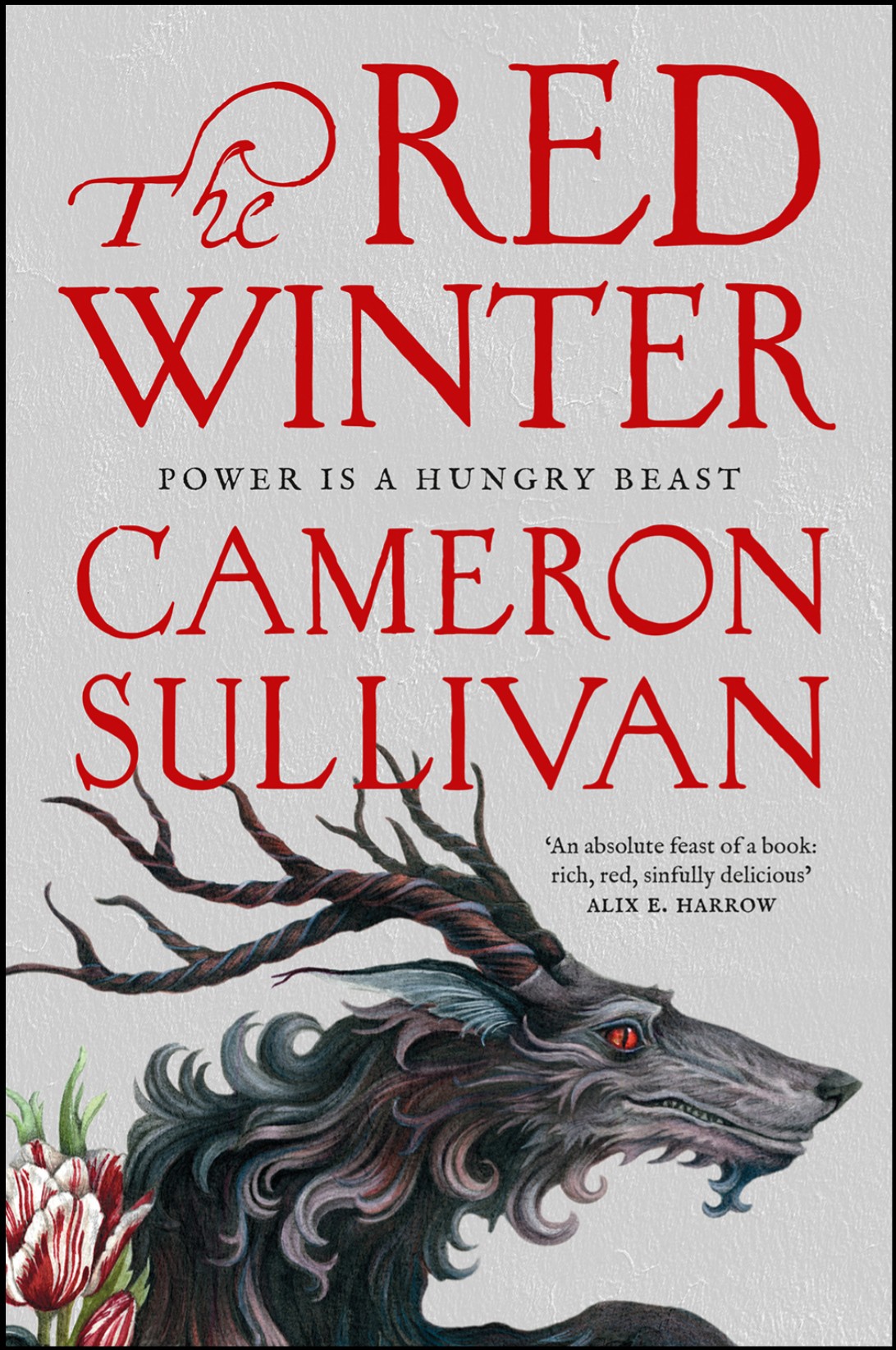
A possessed man takes his demon to hunt the Beast of Gevaudan, except he already tried, and has to cope with coming across his previous failures. There are some interesting ideas, but the asides in the footnotes are not entertaining enough not to be an irritation, which makes the reading a little bit of a chore. Either you will find the wit on display acceptable, and it will be fine, or you won’t, and it won’t be. I like my historical fiction, but you have to be funny if you’re going to try and be funny.

1 Like

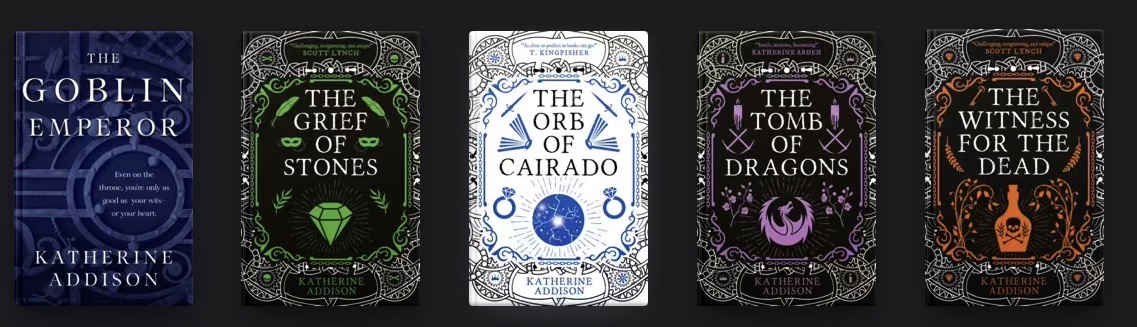
Comfort re-reading of the Goblin Emperor and the four linked novellas.

The setting is unusual, in a world where trams and airships and magic and industrial accidents and vengeful ghosts exist, in an entirely matter of fact and non-twee way. Very humane writing.

2 Likes


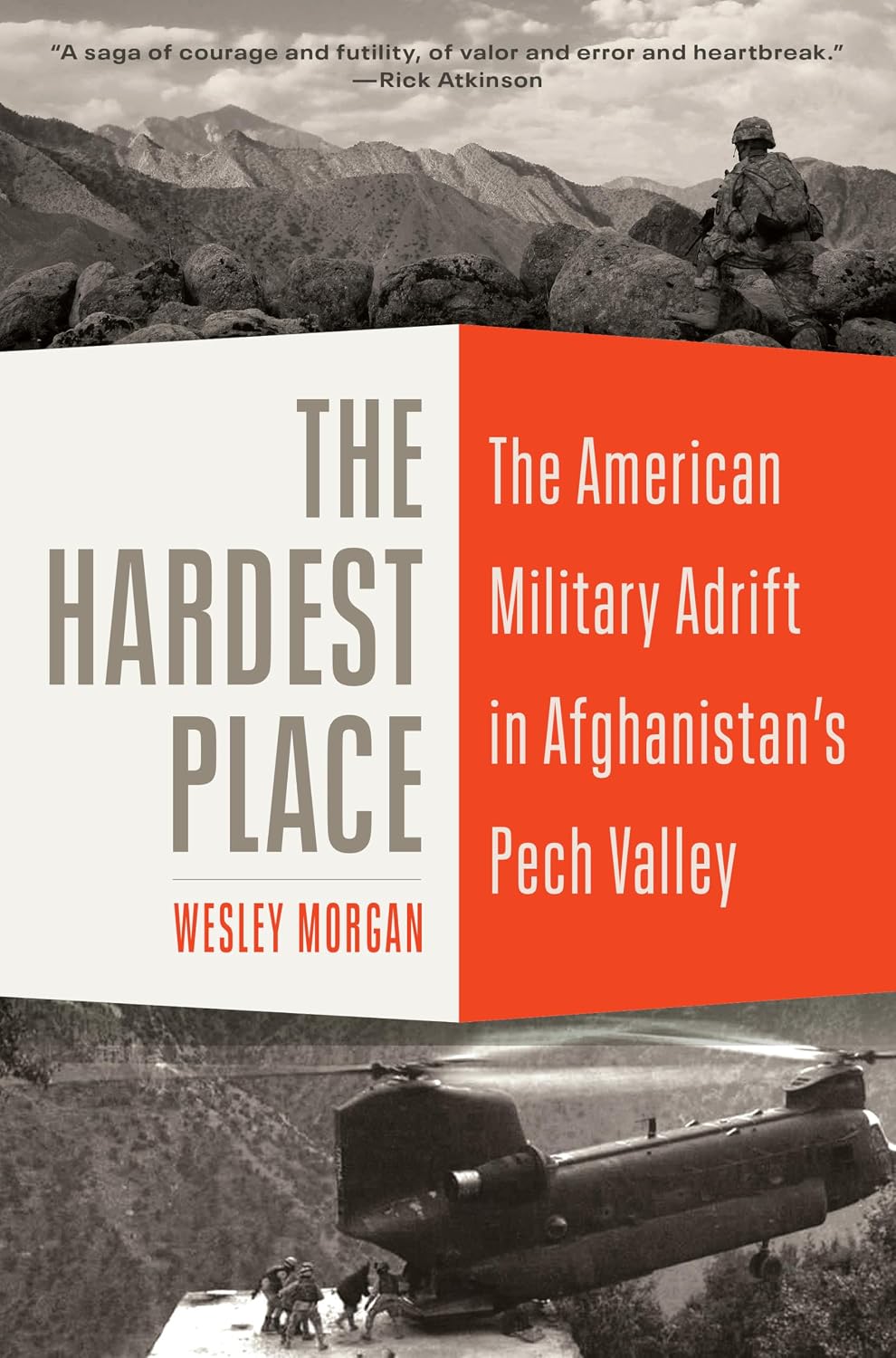
‘Adrift’ is the correct word here, as time after time, commands and units are in a sort of vacuum (in various ways) and their actions never add up to much as the political/strategic environment periodically ‘resets’ and the same mistakes are made over and over again. Imagine if you had a bunch of forces, and you deploy them into the same valley, over and over again, as a kind of roguelike game. The parameters of the game shift back and forth, but ultimately the core of what you can do stays the same.


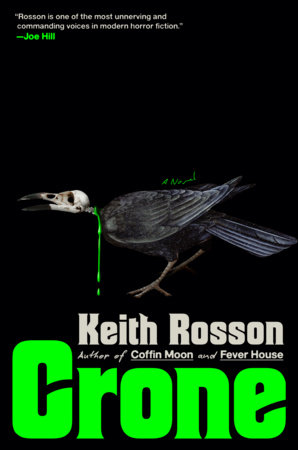
Not as good as Fever House, but better than Coffin Moon, thankfully. Some odd additions that make me wonder what they were trying to achieve.


Extremely my sort of thing. Essential reading as far as I consider it.


First book in a trilogy covering inter-war Soviet diplomacy and the attempts to navigate an extremely suspicious, hostile, and demanding international world. Narrative history, very readable, some excellent footnotes, but also an irritating habit of saying “X must have thought this!” so regularly I want to shout at the book.


I find Buehlman compulsively readable, and his attempts at different languages commendable, but his use of substitute swear words (when he uses the English classics in the text anyway) I find both objectionable and cringe. Please stop. Other than that, this is a book I ploughed through in two days, and it only took two because I was on holiday. There is what I would consider an enormous narrative cheat in this book, that would normally make me throw it aside…but I liked it too much.

3 Likes