There seems to be a pretty big discrepancy between critic reviews and everything I’ve heard from people who have seen it. Sure, it’s anecdotal, but I also have yet to hear someone personally who liked it all that much.
1 Like
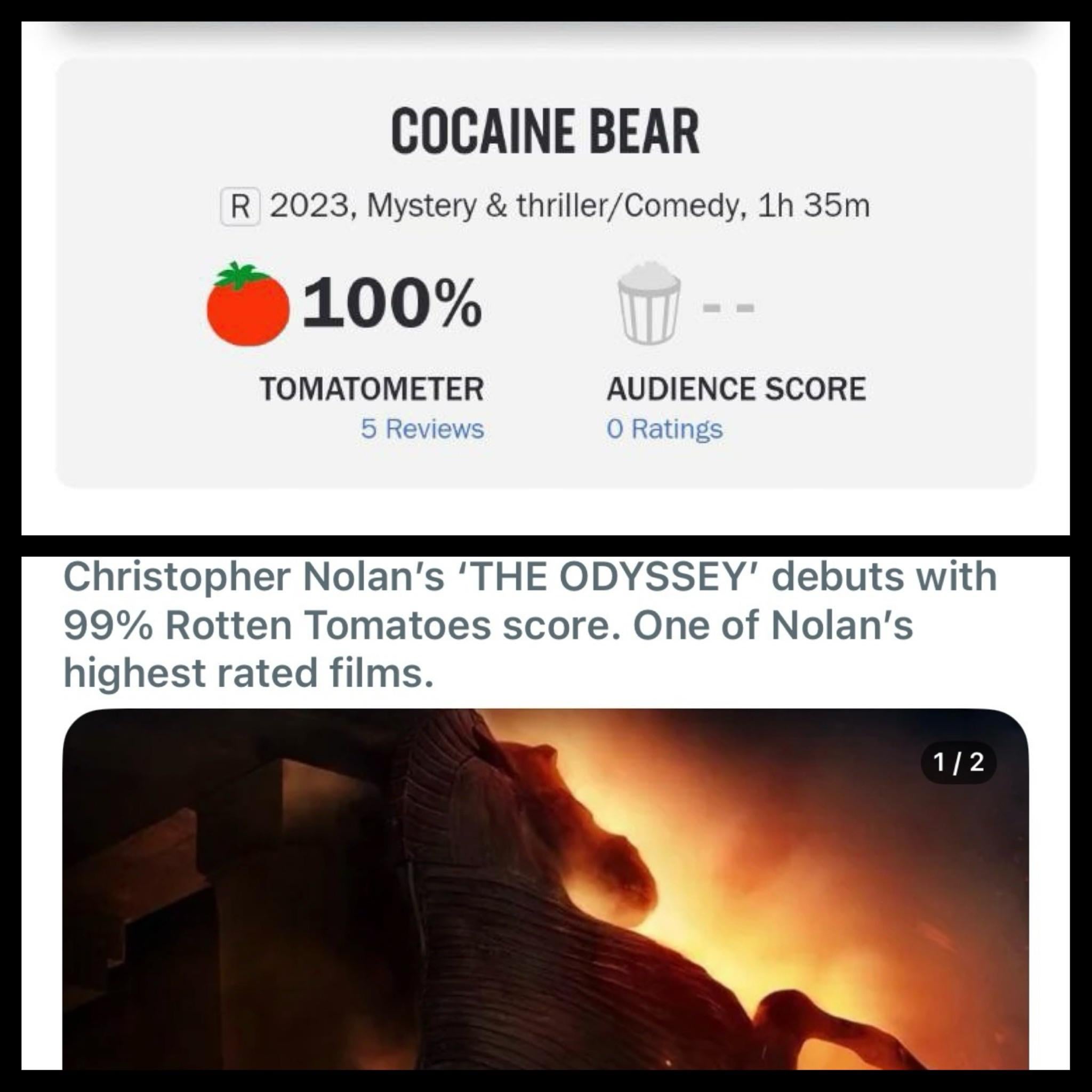
As this resounding speech echoed in my ears, it occurred to me that it sounds nothing like the heroes of Homer—who, after all, gleefully vaunt over the mutilated bodies of their slaughtered enemies—but a lot like the heroes of Christopher Nolan movies. This tormented, guilt-ridden Odysseus, stripped of humor and wit, seductiveness and cleverness, is a sibling of Memento’s anguished amnesiac, of Batman, of Oppenheimer, men agonized by pasts they wrestle with in different ways. Speaking to the Times on the eve of his movie’s release, Nolan acknowledged how, as he read various translations of the Odyssey, he realized that it was the “ur-text. It’s in everything I’ve done before.”
But whatever his lifelong fascination with the epic, Nolan has merely remade Homer’s hero in his own image, just as he has imposed on Odysseus’s adventures values utterly foreign to Homer.
3 Likes
Masters of the Universe
Yeah, bear with me. It is available to stream on Prime now and I watched it a) for nostalgia, and b) because there were some reviews suggesting it isn’t as bad as you’d think.
You know what, they were right. You obviously have to go in to it knowing what you’re about to watch, Electric guitars blaring while a muscled man holds up a sword of power in slow motion wearing a leather skirt, boots, and harness? Check. A guy with an extendable neck that he can whip around to attack? Check. Magic, lasers, spaceships, monsters? All check.
The thing was, it was insane and frantic but also fun. It didn’t take itself seriously but at the same time wasn’t infantile. There was also some seriously funny humor that works here in exactly the same way it doesn’t work in Marvel movies.
The gags about how Adam named them all are pretty funny and make 80s names like Ram Man and Fisto make sense.
3 Likes
Homer is Bronze Age poetry. In fact, he’s archaic-era poetry that reflects a folk memory of the Bronze Age. It’s very important to realize that we need to constantly defamiliarize and be open to how very strange these poems are, and to the fact that they were always strange. They were always mythical. They evoked a world that never actually fully existed in the way it is represented in The Odyssey . I don’t believe that in archaic or Mycenaean Greece there were goddesses descending to talk to people. And the poem reflects multiple different eras in history, because it’s based on this long preexisting oral tradition.
3 Likes
Really enjoyed this article–thanks for linking it here, as I’d not have seen it otherwise.
All of this nattering about the Nolan Odyssey has had me going back and rereading War Music, by Christopher Logue, a British poet. It’s essentially a modern poetic retelling of The Iliad, with periodic and purposefully anachronistic allusions that disrupt the sense of “this was 3,000 years ago.” And it really works a lot of the time. It’s weird but engrossing. And it somehow reinforces the idea that Thompson writes about–how “alien” all of this is.
I’m probably not explaining it very well, so here’s a quote from it:
“A hundred of us pitch our sword to him…
Yet even as they flew, their blades
Changed into wings, their pommels into heads,
Their hilts to feathered chests, and what were swords
Were turned to doves, a swirl of doves,
And waltzing out of it, in oyster silk,
Running her tongue around her strawberry lips
While repositioning a spaghetti shoulder-strap,
The Queen of Love, Our Lady Aphrodite.”
2 Likes
I enjoyed the Odyessey, thought it was solid. I dont think its the 10/10 film that its being reviewed as though.
I agree with OhBollox that Damon probably wasnt the guy for this role. Not enough gravitas in his toolkit. While the directing was competent, it didnt have the things I really love from Nolan, like complicated characters and mind bending story arcs. Presumably this is because he had to stay somewhat true to the source material.
The final most damning thing I can say is that my son was more interested in talking about the bottle flip he did into the cinema bin than he was excited to talk about the movie.
2 Likes
Staying close to the source material was definitely not his goal.
1 Like
Perhaps Nolan is so far up his own arse that he considers himself the next Homer, but it seems like the main story beats are there rather than Nolan reinventing the story whole cloth.
1 Like
Nolan is definitely up his own arse!
My main argument after thinking about the film and re-reading the poem, is that Odysseus from the poem is one of the most complicated figures in Greek literature, and I think you can take even a very glancing look at modern discussions about him, and find a huge range of interpretations. The film version is not only completely different, he’s also completely at odds with the poem version.
In the poem, Odysseus is not sad he helped destroy Troy, which made Damon’s turn to camera and “We’re the baddies.” speech in the film particularly painful to listen to. Odysseus is a loudmouth, a braggart, a cunning trickster with more in common with the likes of Loki, than Nolan’s Vietnam veteran from Boston, who has flown home to the US to cry about having to kill gook women and children. While the events in the film mirror events in the poem, everything around them is changed. Odysseus hasn’t destroyed the world of the Bronze Age (God bless Hathaway for having to deliver lines like “Our age of bronze is ending.” without laughing and stabbing Nolan with his script), he hasn’t contravened Zeus’ law (because you don’t owe hospitality to enemies), and he gladly nails both Calypso and Circe for years, including fathering children, and still wants to go home and get back to fucking his wife.
The suitors don’t really fight, for instance, they get massacred, and this is, in the context of the poem, morally correct. Odysseus and Telemachus kill a bunch of their slave girls for sleeping with the suitors, and again, this is morally correct. This is omitted entirely from the film, as is Odysseus’ weeping, which he does often, and openly. He’s this sort of multifaceted Greek uberchad, who can think or trick his way out of any situation, and is upheld as a glorious hero for doing stuff the Greeks thought was just firm but fair leadership, like killing a bunch of women, sacking cities on the way home basically for a laugh, and blaming his men for his problems.
7 Likes
The Economist critic is not a fan. https://www.economist.com/culture/2026/07/15/a-very-silly-adaptation-of-the-odyssey (paywall, sorry).
The scenery is similarly unsuitable, and often far too pretty. Soldiers in elegant gunmetal grey look less like ancient warriors than Warhammer toys. The ochre, candlelit palaces do not resemble warlords’ lairs but boutique hotels. During the beach scenes with the nymph Calypso (Charlize Theron), Odysseus (Matt Damon) seems less to be in agonising exile than on a Caribbean mini-break (they are wearing lots of linen). And the less said about the Cyclops, the better.
This is irksome but typical. Every adaptation of an ancient text is as much about its own era as the original work; less a lens than a mirror. The ancient Athenians transformed Homeric epic into psychologically acute tragedy. In the 18th century Alexander Pope’s translation managed to make Odysseus sound like an effete Enlightenment poet rather than an ancient warrior-king. In 1922 James Joyce’s version offered sex, stream of consciousness and that Modernist literary staple: boredom.
In this way, Sir Christopher’s retelling is part of a time-honoured tradition. It is manifestly a product of the present day. Female characters offer frequent apologias for feminism (not a noted strong suit of the ancients). The casus belli of the Trojan war is given as a desire to improve trade routes, as if Agamemnon were merely a blameless advocate for free trade rather than one of antiquity’s greatest thugs.
5 Likes
https://archive.ph/20260728072519/https://www.economist.com/culture/2026/07/15/a-very-silly-adaptation-of-the-odyssey - unpaywalled.
In other ways it is surprising, as “The Odyssey” has been a wrecker of reputations. In 2024 a film starring Ralph Fiennes was dismissed as “dull” and a “slog”.
Hey I liked The Return.
It’s a challenge to represent deities on film without veering into Clash of the Titans silliness, so Nolan may have been sensible to leave them out. Even Zendaya’s underwritten Athena turns out to be a vulnerable victim of war, or perhaps a projection of Odysseus’ conscience – not a scheming and bloodthirsty war goddess. Other goddesses appear in cameo – Calypso, the seal-lady Sirens, Circe, Scylla and Charybdis – but there is no sign that we are supposed to realise they are goddesses. Poseidon, Hermes and Helius do not appear in person, although there are some scary storms and shipwrecks. One of my favourite moments was when Zendaya assures Damon that gods are not hard for mortals to understand: ‘Who doesn’t understand thunder? Fire?’ But the film wants to have it both ways. There are no gods, and yet shipwrecks and death are presented as the inevitable consequence of blinding the son of Poseidon and devouring the Cattle of the Sun. Zeus’ law is portrayed as being crucially important, and yet there is no Zeus. Nolan’s vision of the world is not quite big enough to include either real gods or real people who might be different from us.
2 Likes
Thats a great compliment sandwich of an article, my favourite being the third paragraph from the end
Nolan’s Odyssey lacks many of the elements that make the poem great. It has nothing convincing to say about time, memory, history, war, or about the relationship between one warrior’s glorious return and the lives of his family, adversaries, comrades, friends and neighbours. It lacks psychological, emotional, political and ethical depth. Its narrative structure is gimmicky. The writing is abysmal. None of the characters has convincing motivation for their actions or words. There are no sex scenes, and all the food looks horrible.
Utterly eviscerated Nolan there.
3 Likes
I personally enjoyed this part:
As they say at the awards shows, I was humbled to learn that Nolan has read at least the first line of my translation of The Odyssey into iambic pentameter. In at least one interview, he cited my version of the first line of the poem: ‘Tell me about a complicated man.’ But I would be ashamed to have written any part of this script.
3 Likes
Avatar 1,2 and 3. Finally took the plunge (hrrhrrr) to watch Avatar 2 and 3 for the first time.
Mixed feelings since I missed both on the big screen. Usually I like my Sci-fi movies on the big screen, but the pandemic has killed the slowly dying cinema scene here and I didn’t bother the prolonged trip and effort aside from Dune part one and two to go to cinemas somewhere past the horizon that are still alive here. The media black out worked wonders for me. I didn’t get spoiled one bit about anything in those movies. That was nice. The spectacle and the effects were also nice. As a grumpy old bachelor foreveralone™ the central family plot‘s appeal was largely lost on me. Overall I give both movies a good not great rating.
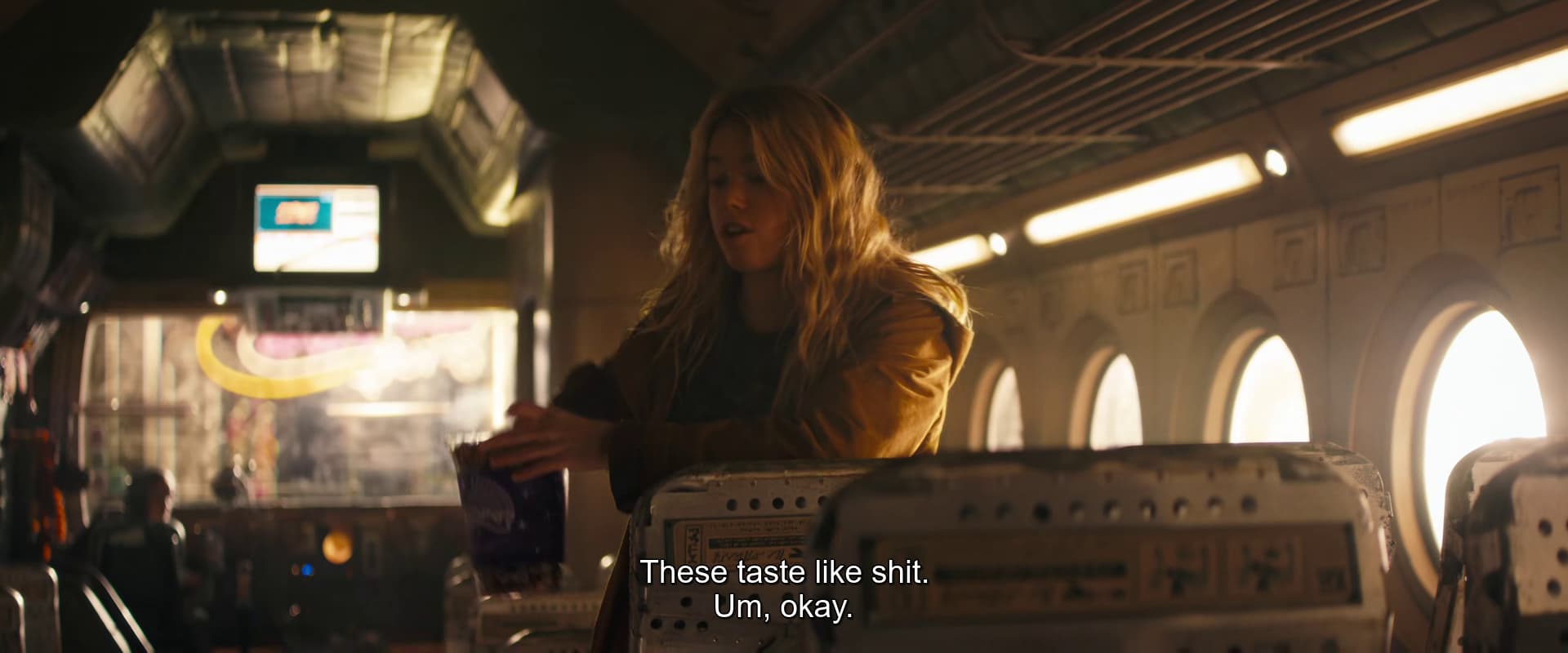
Supergirl. Perfectly okay. Musically a bit better than average, some decent jokes, and comes close to having an interesting protagonist. If you slate something like this, there’s a biiiig line of Marvel films behind it that are much worse.
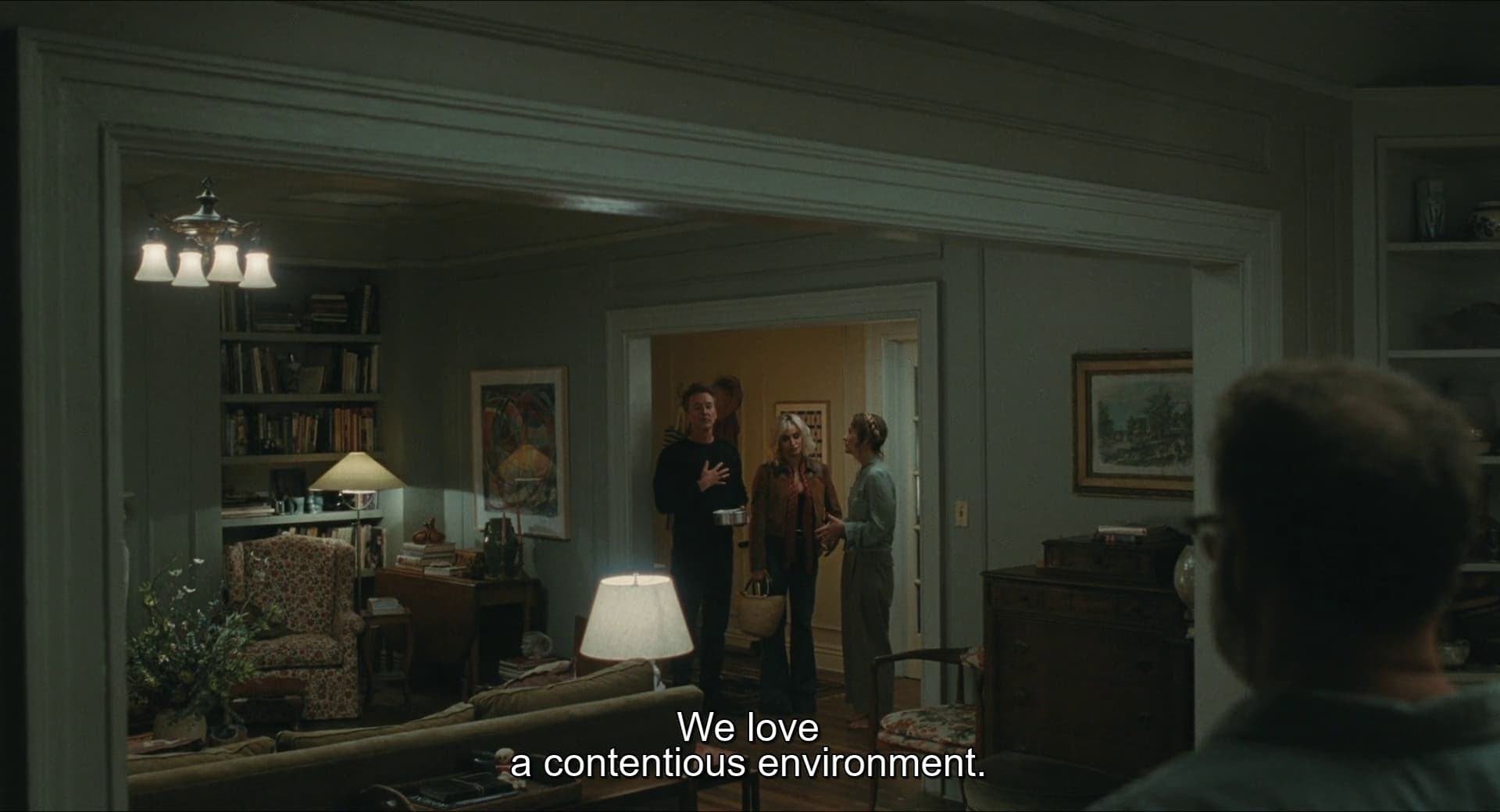
The Invite. Perhaps the best comedy I have seen this year. Some masterful orchestration of dialogue and music, and I was rapt with just Wilde and Rogen. Adding Cruz and Norton to that was incredibly good. Wilde did a masterful job. Eminently quotable.
The End of Oak Street. Better than I expected, and with a somewhat more grim tone, albeit softened by the kid-friendly camerawork. Hathaway is really good, McGregor is okay, the creature design is quite accomplished. I think there is an aspect to the ending that has deliberately been ignored, which makes it extremely bleak if you think on it a little bit more. I think if this had been a little bit more adult, it could have been a banger, but obviously the concept is weird enough to have scared them into watering down the whole thing. The CGI dog is bullshit, too.
Evil Dead Burn. Whatever they think they’re doing, they’re not doing it. Boring.
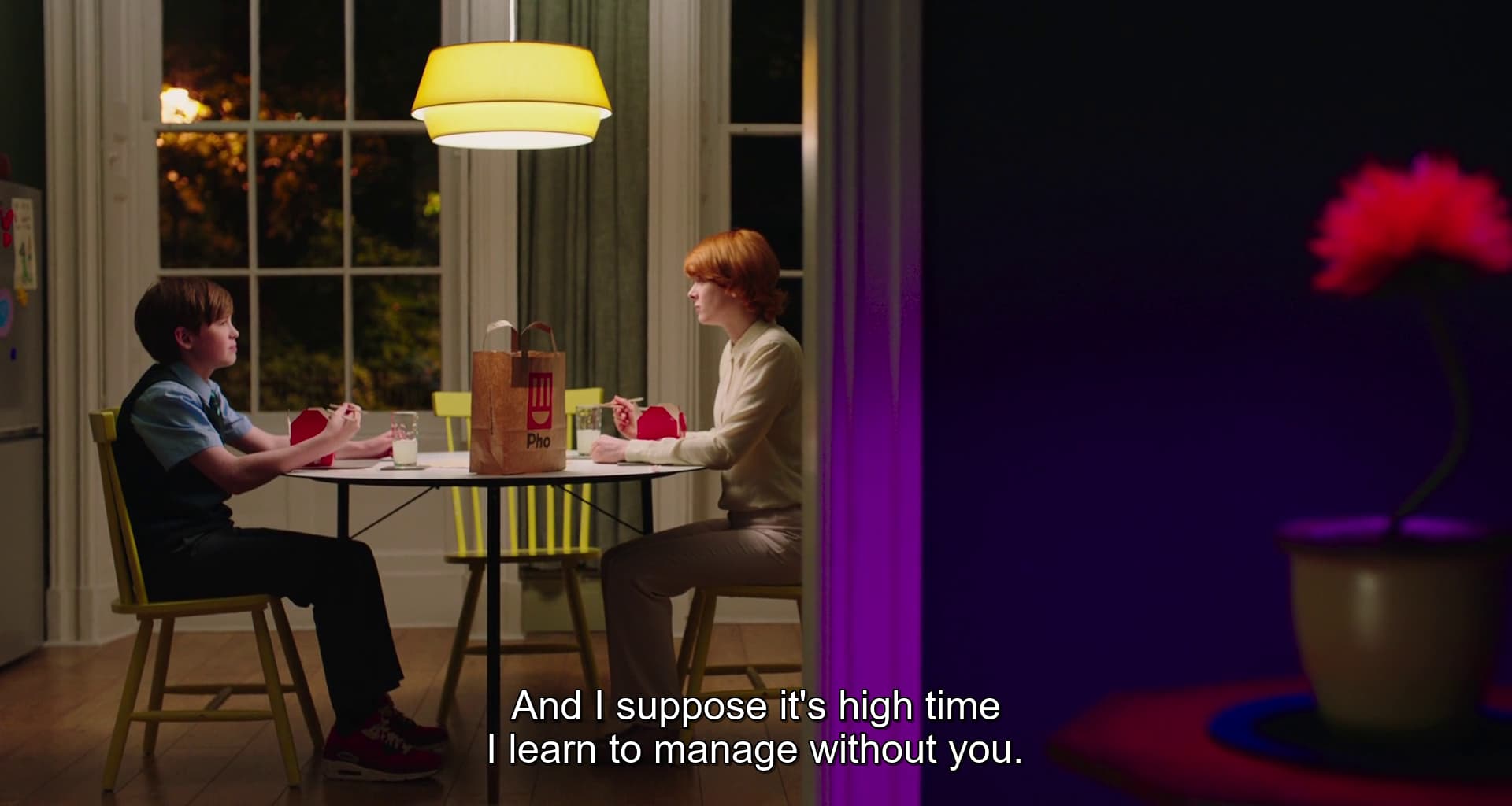
Little Joe. Incredible set design and visuals, combined with a slow, creeping unease. Very good.
2 Likes
2 Likes
I would never care about this, if it was not from Nathan Fielder - and he makes this a much watch for me.
2 Likes
I knew nothing about this but watched the trailer because it was A24. I thought the actress was amazing at how unsettling she’d managed to be, and how that guy needed to get out of there before his legs got broken and he got tied to a bed.
Then I googled it and found out what was actually going on. Mind blown
1 Like
Tuner. Low stakes crime movie where a piano tuner breaks bad. Enjoyable performances from both young romantic leads, with an extended cameo from Dustin Hoffman with dementia as the titular leads Miyaga.
Easy date night movie.
2 Likes